History
1961 to 2026 — 65-year journey
From a few-day local celebration to the largest international festival in Central Asia — the journey of Namangan's Flower Festival.
Pre-history
17th–19th c.
The Gulzor mahalla
Where Babur Park stands today, the 17th–19th-century mahalla called Gulzor grew flowers, made flower-honey, syrups and sugar, and prepared medicinal infusions from petals and roots. The mahalla's reputation reached Khan Khudoyar of Kokand (r. 1845–1876), who relocated the residents and built a madrasa on the site. After Russian forces took Namangan in October 1875, the madrasa became a fortress and in 1884 the regional governor's private garden was laid out on its grounds.First festival
1961
First flower festival in the Park of Culture and Recreation
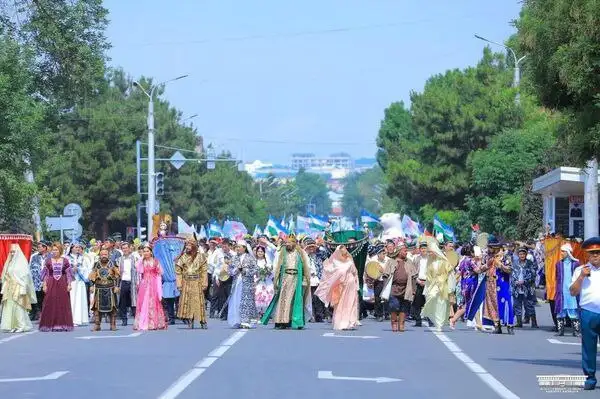
On 24–27 August, the first flower festival is held in Namangan's Park of Culture and Recreation. Within three years it has grown into a “caravan of carts and cars decorated with flowers” — the prototype of today's parade.Source: Wikipedia (UZ/RU)
Soviet era
1961–1991
A local celebration
Throughout the Soviet era and into the early years of independence, the festival runs once a year at the end of August and lasts 2–3 days. The park has been named after Zahiriddin Muhammad Babur since 1991.Rebranding
2018
From a holiday to a festival
The “Flower Holiday” is officially renamed the “Flower Festival”. Organisers begin to expand the programme and the share of foreign participants.International status
2019
International status on a presidential recommendation
On the recommendation of President Sh. Mirziyoyev, the festival officially receives international status. Foreign florists and landscape designers begin to join the Uzbek participants.Looking back
2020
COVID-19 — the only cancellation
Due to the pandemic, the festival is cancelled for the first and only time since 1961.State decision
4 August 2021
PP-5209 — the festival is institutionalised
A Presidential Resolution (PP-5209) gives the festival official state status, designates the Namangan and Davlatabad districts as floricultural specialisation zones, introduces customs exemptions for flower bulbs and allocates 20 billion UZS in support funding. That year, 10 million seedlings are planted for the 60th edition.Source: lex.uz/docs/5552394
61st edition
2022
Extended 15-day format
The festival is extended to 14–15 days for the first time. 20+ million flowers are planted in Babur Park, delegations from 30+ countries take part, and over 500,000 visitors come on opening day.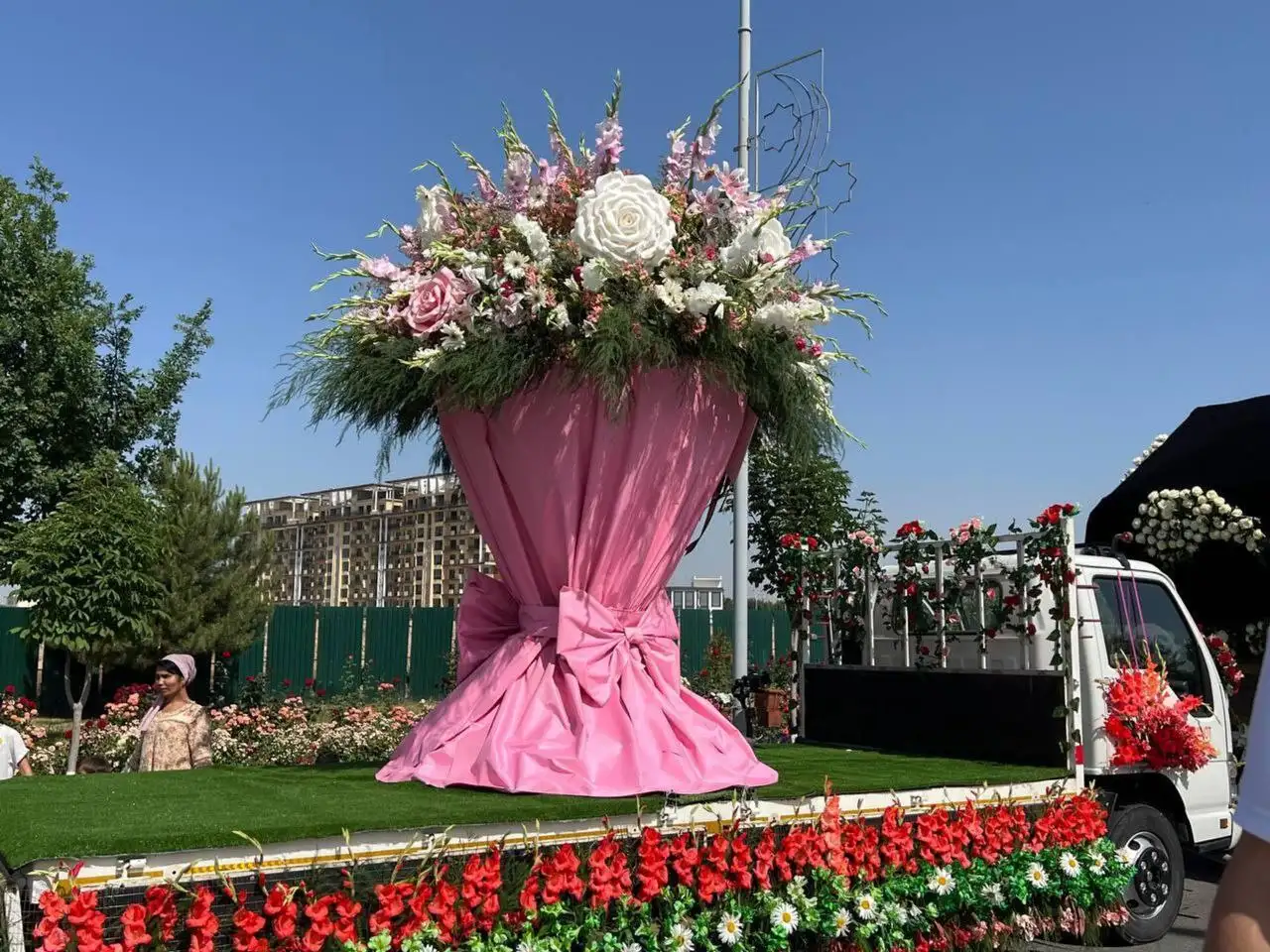
62nd edition
2023
Yunnan delegation and a 32-day programme
21 May – 21 June. 250 master florists and participants from 22 countries. China's Yunnan Province presents 70+ large compositions. The hospitality base reaches 25 hotels, 526 family guesthouses, 6 hostels and 18 sanatoriums.63rd edition
2024
“Valley of Legends” and “New Uzbekistan Park”
Lasts 36 days. 45 million flowers and shrubs are planted across the city. New themed parks open — “Valley of Legends” and “New Uzbekistan Park”. Visitors top 6 million, including more than 200,000 from abroad.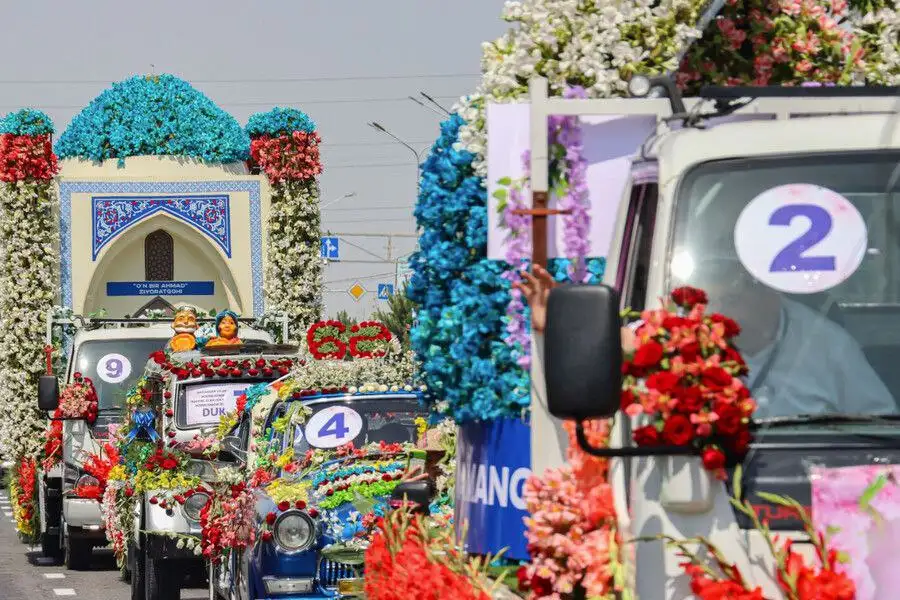
64th edition
2025
100 million flowers, Fashion Week, drone show
25 May – 29 June. 100 million flowers planted. 100+ cultural events: Fashion Week, drone show, “World Cuisine in Namangan”, Lavender Festival, “Ovoz” and “X-Factor” competitions, Tech Summit, Ideathon-2025. The Tourism Committee projected 8 million local and more than 300,000 foreign tourists.Source: gov.uz/uzbektourism/news/view/55754
65th edition · current year
2026
Longest edition ever — 50 days and a Guinness attempt
24 May – 12 July, 50 days in total. A Guinness World Records attempt is planned with 150 million seedlings and 120 species of flowers. More than 150 national and international events, including the “Namangan through the eyes of influencers” forum, the Asian Business Women's Forum, the 3rd International Handicrafts Exhibition, the “Kinokarvon” film project, and Bollywood “Days of Indian Culture”.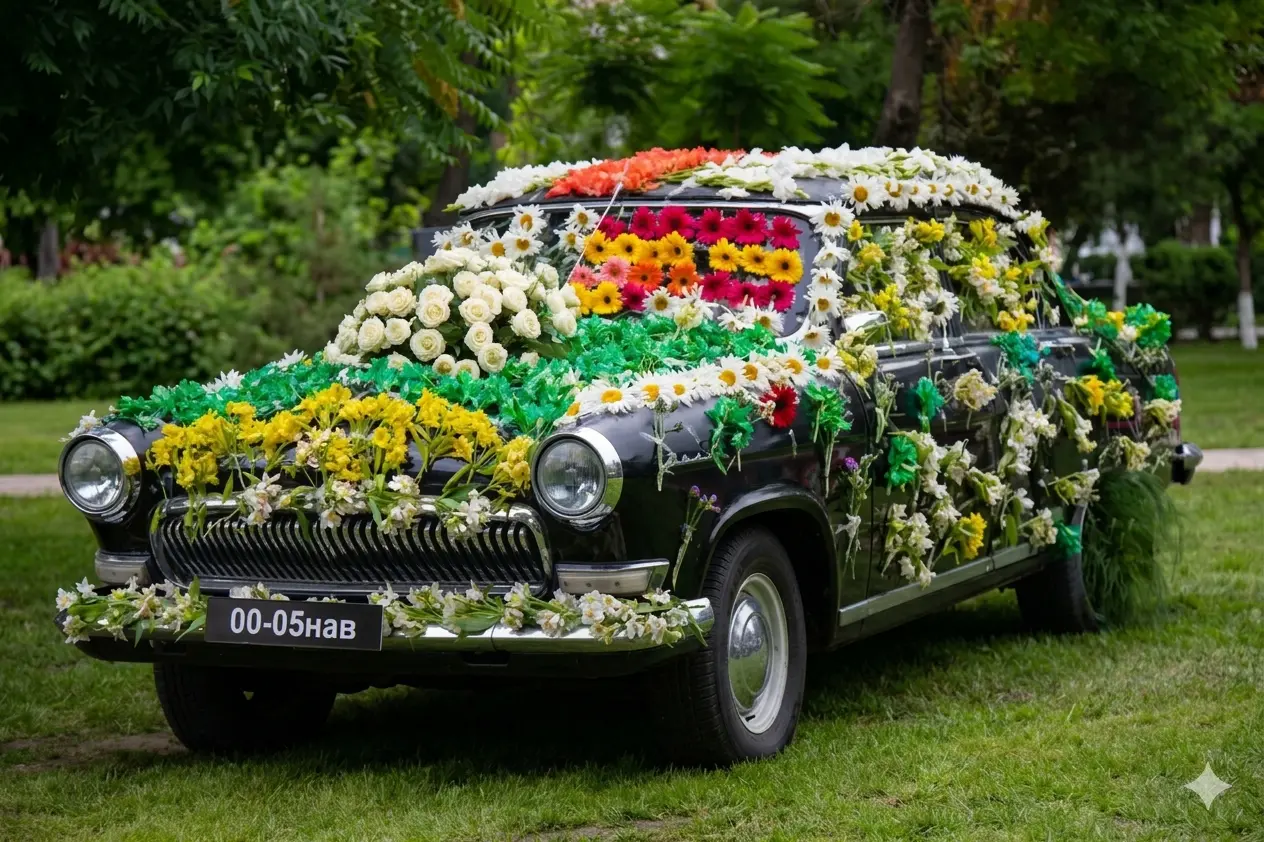
To be continued
This page will be updated after 12 July 2026 with the Guinness attempt outcome and the final numbers.
Back to home